


HavenBridge Group

Build the bridge that carries your financial future forward. Never Go Backwards.

For decades, the job was to accumulate. As retirement comes into view, the job quietly changes to protecting what you built. That transition is your bridge, and our financial educators and insurance professionals help you build it to stand strong.

Fiduciary mindset Fully licensed Carriers rated A.M. Best A or higher
Line drawing of a suspension bridge stretching toward a rising sun, with a single figure walking the span.
The crossing: from building wealth to living on it

Our Story

Every successful professional reaches a quiet turning point.

For most of a career, the priority is clear: accumulate, grow, optimize. But as retirement approaches, the objective fundamentally shifts from building wealth to shielding it, across a far more precarious landscape defined by market volatility, tax exposure, and shocks nobody schedules.

That transition is the bridge. A haven is a place of safety. A bridge is what carries you there. As financial educators and insurance professionals, we help you design and build a bridge strong enough to weather life’s storms—helping protect what you’ve worked for and carry it forward to the people and purposes that matter most.

That is the essence of our commitment, and the reason for our motto: Never Go Backwards.1

Three generations of a family standing together on a terrace, looking out over the coast at sunrise.

Our purpose is to help individuals and families live their best lives with confidence. Although wealth is not the source of happiness, it creates the foundation of security and independence that allows it to flourish. We create the bridge that equips our clients with the knowledge and strategies to build and preserve their wealth over time.

HavenBridge Group Mission

The Six Risks

The strategies that built your future are not always the ones that protect it.

A central part of our work is education. Six risks tend to surface in the years near retirement, and each one is easier to answer while there is still time to design around it. Open any card to see how the risk actually behaves.

Risk 01 Line drawing of a bucket being filled with gold coins while coins leak out through a crack in its side.

The Inflation Erosion

Purchasing power degradation

Your gains are not what they seem

Picture filling a bucket that has small, persistent leaks in the bottom. No matter how fast you pour, a slow drain remains. Inflation does not empty a portfolio in one dramatic spill. It quietly reduces what each dollar can buy, so a balance that looks full on paper falls short across a multi-decade retirement.

Traditional accumulation thinking rewards one metric: the top line growth rate on a statement. But nominal return alone can create an illusion of security. What matters is what those dollars can buy when you need them.

  • The tax skim. If combined federal and state tax takes roughly a quarter of each year's gains, a 10% return is really compounding closer to 7.5%.
  • The purchasing power leak. With the cost of living rising, the dollars themselves buy less each year, even when the balance never drops.
  • The combined erosion. These forces stack rather than take turns, which is where the gap between the headline number and the spendable number opens up.

Protecting long-term wealth calls for a strategy engineered to address both the rising cost of living and the tax drag along the way.
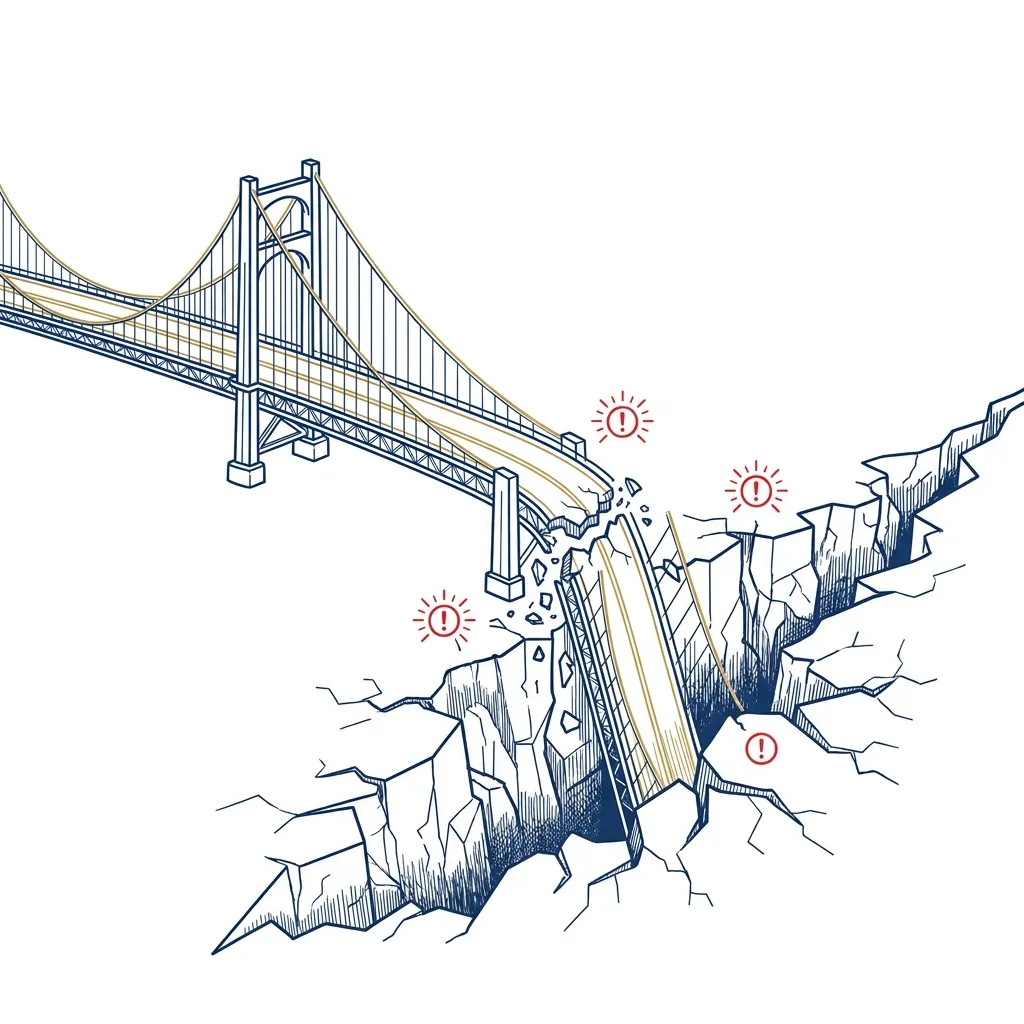

Risk 02 Line drawing of a suspension bridge collapsed into a wide chasm, marked with red warning symbols.

The Volatility Setback

Sequence of returns risk

Twenty years of saving, one badly timed year

You have driven for hours, and the weather turns violent exactly as you reach the bridge to your destination. Then comes the sign: bridge out ahead. A downturn at the wrong moment does the same thing to a retirement timeline, arriving just as you begin drawing income rather than adding to savings.

A 401(k), IRA, or similar tax-deferred plan is an exceptional engine during the earning years, particularly when an employer match is available. The structural vulnerability appears at the moment you move from accumulating to distributing.

While you are saving, a downturn is temporary and future contributions buy at lower prices. Once you are withdrawing, the math flips. Consider a hypothetical portfolio of $2,000,000 that falls 20% just before the first year of retirement, leaving $1,600,000.

  • Under the widely cited 4% Rule, the annual draw falls from $80,000 to $64,000, a difference of $16,000 every year.
  • Recovering the original balance no longer takes a 20% gain. It takes a 25% gain simply to get back to even.
  • Shares sold at the bottom to fund income are gone, so that portion of principal cannot participate in any recovery.

This is why a distribution strategy needs a source of income that does not depend on selling at the wrong time.

Risk 03 Line drawing of a bank vault door with gold coins trickling out from beneath its mechanism.

The Tax Drain

Uncoordinated tax exposure

A cost you feel later, every year

Imagine a familiar commute where the highway department has installed high-speed electronic tolls. No booths, no lights, nothing to slow you down. Every few miles a camera quietly deducts a fee. You only notice weeks later, on the statement. Uncoordinated tax exposure works the same way.

Taxes are often treated as a fixed annual chore rather than something a plan can be built around. The vulnerability is structural: the same mechanisms that provide relief during the accumulation years can set the terms of the distribution years.

Consider a hypothetical retiree drawing $150,000 a year entirely from a traditional IRA while also holding residential real estate, with each asset treated as its own isolated pool.

  • The ordinary income tollgate. Every withdrawal is taxed at ordinary income rates. As Required Minimum Distributions grow, they can push taxable income into a higher marginal bracket.
  • The Social Security cascade. Higher provisional income can cross statutory thresholds, causing up to 85% of Social Security benefits to become subject to federal income tax.
  • Unused shields. Depreciation and other non-cash deductions that were never planned for simply go unclaimed.

A well-built strategy looks at the whole balance sheet at once, so withdrawals, deductions, and brackets are considered together rather than one account at a time. Your CPA or tax attorney remains the right person to confirm the tax treatment of any specific move.

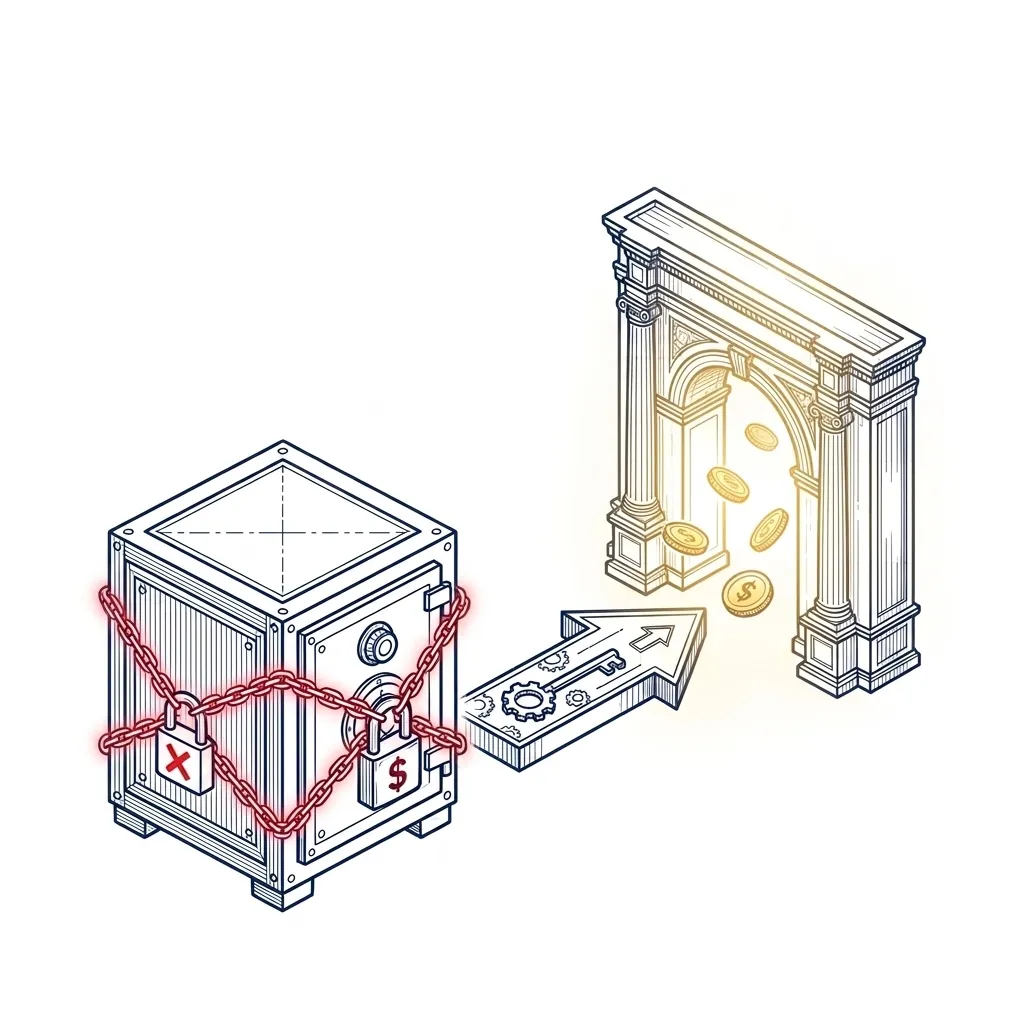
Risk 04 Line drawing of a safe wrapped in red chains and padlocks beside an open archway with coins passing freely through it.

The Liquidity Lock

No access to funds when needed

The wealth is there, the access is blocked

You are sailing a magnificent yacht. A shallow reef appears ahead, or an uncharted island worth exploring. You reach the helm and find the rudder padlocked straight forward. Enormous value, enormous momentum, and no ability to change course in real time.

Financial freedom has two measures: how much you have accumulated, and how quickly you can put it to work. Standard retirement plans build momentum well during a career, but they generally restrict access before age 59 and a half.

Consider a hypothetical executive with a $4,000,000 net worth, of which $3,500,000 sits inside an employer plan and the remainder is home equity. A time-sensitive opportunity needs $300,000 in cash.

  • Ordinary income treatment. A distribution of that size is generally taxed as ordinary income, at the highest brackets that apply.
  • The early distribution penalty. Before age 59 and a half, a 10% federal penalty typically applies on top of income tax.
  • Interrupted compounding. Dollars withdrawn cannot be put back, so their growth inside the plan ends permanently.

A balanced plan pairs accumulation with contractually accessible liquidity, so capital remains reachable when life calls for it.

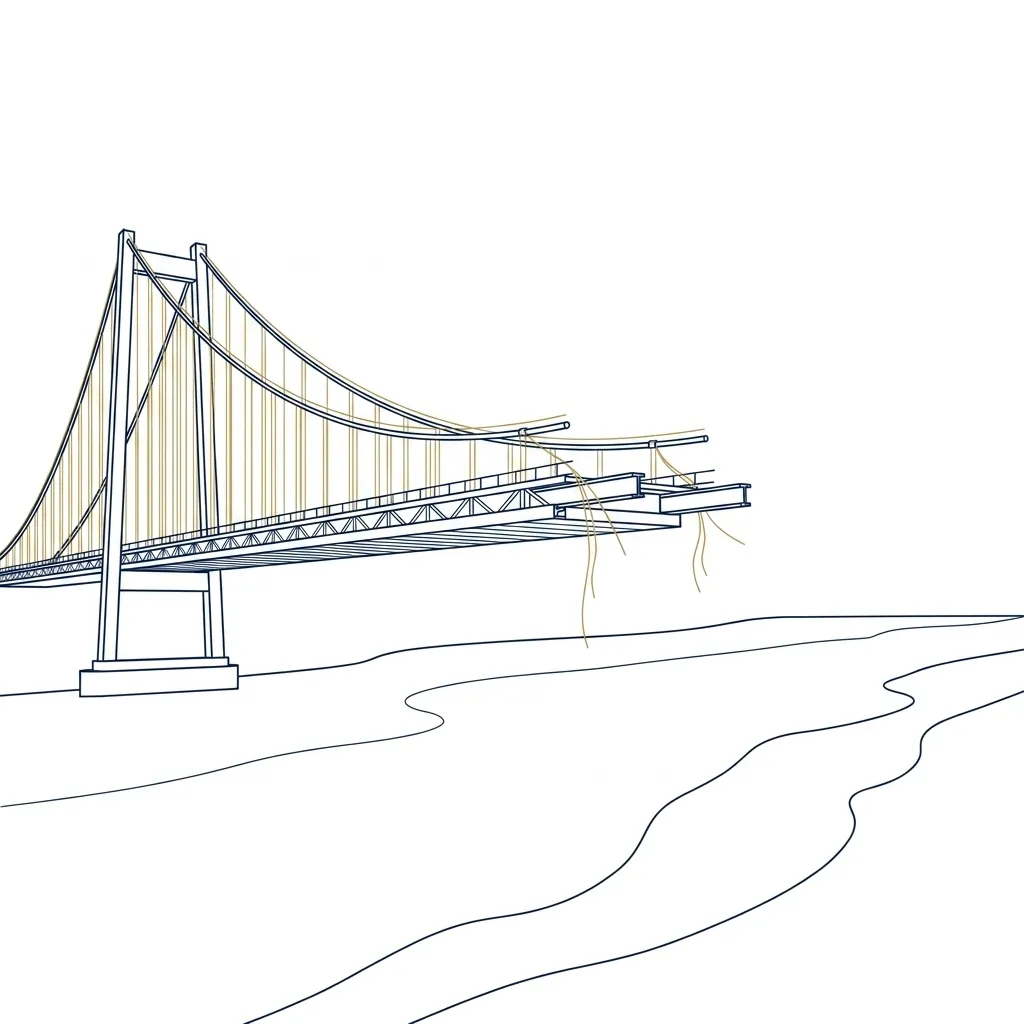
Risk 05 Line drawing of an unfinished suspension bridge whose deck stops in mid-air, with loose cables hanging from the end.

The Longevity Paradox

Outliving the plan

A long life meets a short runway

You calculate fuel precisely for a cross-country flight, based on average headwinds and standard times. Hours in, the runway is moved miles further down the coast. The needle is dipping toward empty while you are still in the air. A plan built on averages can fall behind a longer life.

Longer, healthier lives have turned retirement from a brief final chapter into a multi-decade season. That is a triumph, and it introduces a real planning risk. While you are saving, a longer horizon is your greatest ally. Once you are spending, time becomes the wildcard.

Consider a hypothetical $2,500,000 portfolio structured to sustain a lifestyle to roughly age 83, based on standard actuarial tables. If that retiree lives to 93, the final decade changes character:

  • Accelerating depletion. A withdrawal rate tuned to average life expectancy erodes principal faster in later years.
  • Rising fixed costs. Active lifestyle spending declines, then is replaced by healthcare and care costs that are not discretionary.
  • No room to recover. A retiree at 90 cannot return to work or wait out a market cycle. The time needed to rebuild no longer exists.

This is why a plan benefits from an income layer that is not tied to a life expectancy estimate, so the income continues however far the runway extends.

Risk 06 Line drawing of an ornate stone column split by a jagged gold crack, with fragments breaking away.

The Care Avalanche

An unplanned long-term care event

One health shock, decades of assets buried

Picture a lodge you built at the base of a snow-covered mountain, reinforced and insulated over years for a peaceful retirement. A quiet shift in the upper shelf sends down a wall of snow with no siren and no time to prepare. A care event arrives the same way, all at once.

Market and tax risk can be modeled from history. A sudden, permanent change in physical or cognitive health resists forecasting, and standard planning often treats healthcare as a gentle upward line rather than a shock.

  • It is not the exception. The U.S. Department of Health and Human Services has reported that most adults who survive to age 65 will develop a severe long-term services and supports need before they die (HHS ASPE, 2019).
  • The safety net assumption. Medicaid is a means-tested program. Qualifying for long-term care benefits generally requires spending down countable assets to a strict limit, often as low as $2,000 for a single individual, though limits and spousal and home equity protections vary by state.
  • The forced sale. Specialized care can run many thousands of dollars a month. Funding it by liquidating a portfolio during a downturn locks in losses that principal cannot recover from.
  • The healthy spouse. When joint assets fund one spouse's care, the surviving spouse is left with a smaller base for their own remaining years.

A thorough strategy plans for this in advance rather than leaving the timeline exposed to chance.

The gap between the statement and the spendable

Hypothetical illustration

Hypothetical and for illustration only. Not a projection, a guarantee, or the result of any client account. Assumes a $100,000 starting balance, a 10% nominal annual return, a 25% effective tax rate on gains, and 3% annual inflation over 20 years. Figures are the arithmetic result of those assumptions and will differ with any change to them. Actual returns, tax rates, and inflation vary.

Never Go Backwards

Forward, or level. Not backward.

Our answer to a bad year is not a better guess about timing. It is a floor. By thoughtfully using fixed index insurance and annuity contracts, we help clients capture index-linked growth in the good years while a contractual floor limits what a down market can take away.2

  • A zero percent floor on index-linked crediting

    When the index falls, the credited interest rate for that period is 0% rather than negative, so index performance alone does not reduce the value.

  • Prior credited interest stays credited

    Interest credited in earlier periods is locked in. A later downturn in the index does not reach back and erase it.

  • Compounding from a higher base

    Avoiding negative index years means growth resumes from where it left off. It takes nearly a 43% gain to recover from a 30% loss.

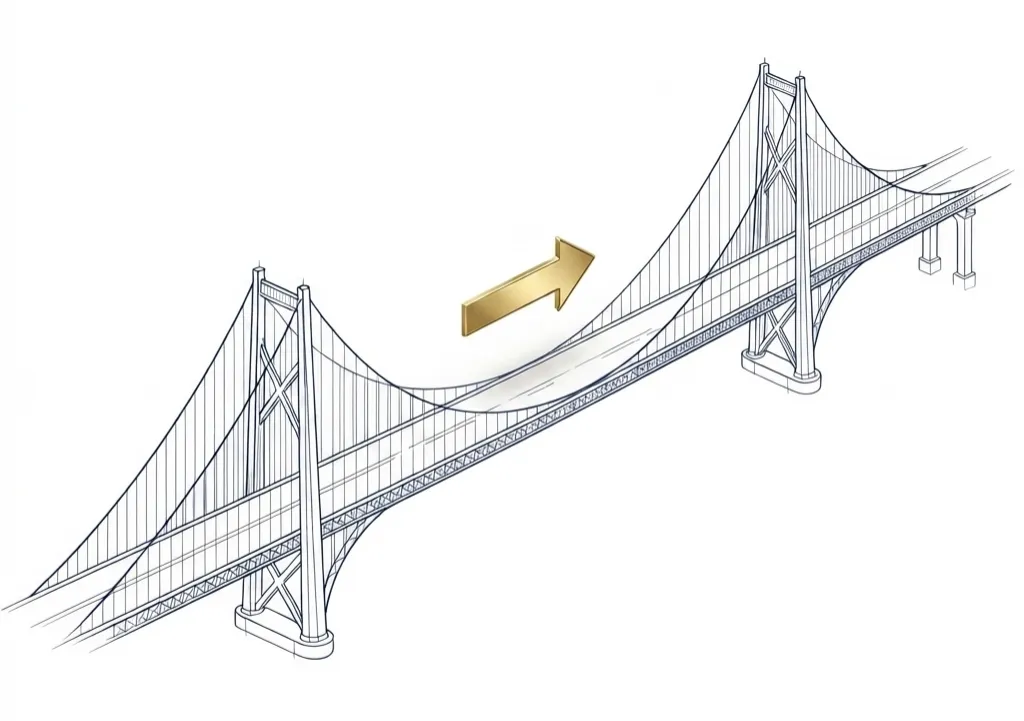
Line drawing of two bridge spans with a gold arrow pointing from the near span forward to the next.
One span to the next. Always forward.

In exchange for downside protection, upside participation is limited by features such as a cap or a participation rate. These are set by the carrier and are not guaranteed for the life of the contract. They may change at renewal within contractual limits. The floor applies to index-linked crediting only and does not prevent value from declining because of policy fees, charges, or outstanding loans. Surrender charge periods, market value adjustments where applicable, and a free look period apply. Guarantees are subject to the claims-paying ability of the issuing insurance company.

The three pillars that hold the bridge

We help clients navigate their most critical financial years with three pillars working as one strong structure.

Pillar One

Grow It

The quiet mechanics that build wealth over decades, understood well enough to be used on purpose.

  • Compound interest, given room and time to work
  • Dollar-cost averaging instead of timing the market
  • Sound principles of allocation, diversification, and rebalancing
  • Index-linked crediting designed to help wealth outpace the rising cost of living

Pillar Two

Protect It

A contractual floor under the years when a setback would cost the most, plus protection that can be used while living.

  • A 0% floor on index-linked crediting in Fixed Indexed Annuities and Indexed Universal Life
  • Tax-advantaged accumulation inside insurance and annuity contracts
  • Lifetime income options that address the fear of outliving assets
  • Living benefit riders for qualifying chronic, critical, or terminal illness

Pillar Three

Use It

Wealth that cannot be reached when life calls for it is not doing its job. This pillar keeps money working and still within reach.

  • Policy cash value that can generally be accessed through policy loans without the age 59 and a half gate
  • An accessible reserve, so a growing asset need not be sold at the wrong moment
  • Income you can turn on, from annuity payments alongside policy loans
  • Permission to actually live the retirement you funded

Every risk has a corresponding defense

The pillars are not abstract. Each of the six risks is answered by one pillar and supported by another.

Risk
Primary
Support
How the pillars answer it
The Inflation Erosion
PrimaryGrow It
SupportProtect It
Index-linked crediting and compounding aim to outpace the rising cost of living, while tax efficiency preserves more of the real return.
The Volatility Setback
PrimaryProtect It
SupportGrow It
A 0% floor means a down index period credits 0% rather than a loss. Diversification and rebalancing reduce exposure as retirement nears.
The Tax Drain
PrimaryProtect It
SupportUse It
Tax-advantaged accumulation inside a contract, with properly structured policy loans as a way to access value without creating a taxable event.
The Liquidity Lock
PrimaryUse It
SupportGrow It
Indexed Universal Life cash value can generally be reached through policy loans without the age 59 and a half restriction on most qualified accounts.
The Longevity Paradox
PrimaryProtect It
SupportUse It
An annuity can convert a portion of savings into income the client cannot outlive and can turn on when it is needed.
The Care Avalanche
PrimaryProtect It
SupportUse It
Living benefit riders let a client access part of a policy's death benefit while living upon a qualifying diagnosis, so care costs need not bury the rest of the plan.

Protection against market downturns described here is achieved through the contract features of Indexed Universal Life and Fixed Indexed Annuities, backed by the issuing insurance company. A living benefit rider is not disability income insurance. It accelerates the policy's own death benefit, is triggered by specific qualifying conditions rather than a general inability to work, and reduces the amount later paid to beneficiaries. Rider availability, definitions, and triggers vary by carrier and by state.

Tailored to your timeline

Every recommendation is built around your own timeline, liquidity needs, health, and goals. We only present what is suitable for your situation.

Everything on the table

We review fees, terms, surrender periods, and how the contract actually works before you take a single step. Your Field Underwriter will walk through a current, carrier-provided illustration with you.

Your existing plan is respected

A 401(k), an IRA, a Roth, real estate, and marketable securities each hold a real place in a plan. We look for what complements them, and we put any proposed change in writing beside your existing coverage.

Strong companies behind the guarantees

A guarantee is only as good as the company standing behind it. HavenBridge Group places business with carriers rated A.M. Best A or higher.

Request Information

Start with information. Nothing more.

Ask for what would help you think this through, and we will send it. You decide how we reach you, and you decide what happens next. There is no obligation, and no cost for the information itself.

  • You choose the channel. Email, text, both, or neither.
  • You can stop hearing from us at any time by replying and saying so.
  • What you share stays with HavenBridge Group. We do not sell or rent your information.
  • The material we send is educational. A conversation only happens if you ask for one.
Our no-call promise We will not call you unless you invite us to do so. If you would like a call, there is a box below for that, and it is entirely optional.

Send me information

Three fields, and a choice about how we follow up.

Please enter your name.

Please enter a valid email address.

Please enter a phone number we can reach you at.

Submitting this form requests educational information only. It does not apply for coverage, create an agreement, or obligate you in any way. We will not call unless you invite us to.

1. References to "Never Go Backwards" reflect the use of Fixed Indexed Annuities and Indexed Universal Life insurance. All guarantees are subject to the claims-paying ability of the issuing insurance company.

2. Indexed Universal Life is life insurance and a Fixed Indexed Annuity is an annuity contract. Neither is a security, a deposit, a bank product, or a savings account, and neither is insured by the FDIC or any federal agency. Values are not directly invested in any index or in the stock market. Caps, participation rates, and spreads are set by the carrier, are not guaranteed for the life of the contract, and may change at renewal within contractual limits. The 0% floor applies to index-linked crediting only and does not prevent value from declining because of policy fees, charges, or outstanding loans.

Policy loans and withdrawals reduce cash value and the death benefit. Outstanding loans accrue interest. A policy that lapses or is surrendered with a loan outstanding may create a taxable event. Tax-advantaged access depends on the policy being properly structured and remaining in force, and on the policy not being classified as a Modified Endowment Contract. Early-year cash value may be limited by surrender charges. Annuities are less liquid than policy cash value. Annuity withdrawals may incur surrender charges and, before age 59 and a half, a 10% federal penalty in addition to ordinary income tax.

Replacements and exchanges. Moving money from an existing policy, annuity, or retirement account can involve surrender charges, the loss of existing benefits, a new surrender period, and tax consequences, and is subject to state replacement rules. Your Field Underwriter will compare existing coverage with any proposed change in writing.

Educational content only. Nothing on this site is tax, legal, or investment advice, an offer to sell, or a solicitation in any jurisdiction where we are not licensed. Discussion of 401(k)s, IRAs, Roth IRAs, real estate, and securities is general education. Please consult your CPA, attorney, or registered investment professional about your own situation. All examples are hypothetical, are provided for illustration, and do not represent the results of any client. Any figures shown are the arithmetic result of the stated assumptions. Product features, riders, and availability vary by carrier and by state. HavenBridge Group does not maintain an in-house team of CPAs or tax advisors.

Source. The long-term care figure cited above is from the U.S. Department of Health and Human Services, Office of the Assistant Secretary for Planning and Evaluation, "What is the Lifetime Risk of Needing and Receiving Long-Term Services and Supports?" (2019), aspe.hhs.gov.